The Psychology of Colors in Children's Book Illustrations: How to Attract Young Readers"

Jul 9, 2025 By

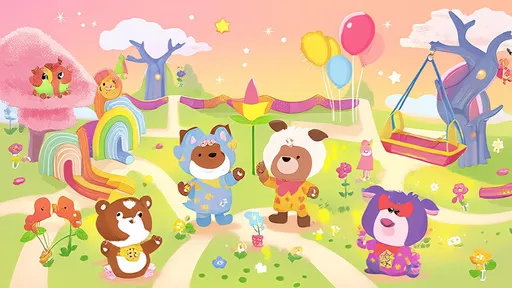
From the moment a child opens a picture book, color plays a silent yet powerful role in shaping their reading experience. Unlike adults who process stories primarily through text, young readers rely heavily on visual cues to interpret narratives, emotions, and underlying messages. The strategic use of color in children's book illustrations isn't merely decorative—it's a psychological language that speaks directly to developing minds.

Research in developmental psychology reveals that children begin responding to color preferences as early as three months old, long before they understand shapes or narratives. Bright, saturated hues tend to capture their attention first, which explains why many classic children's books feature vibrant primary colors. However, the most effective contemporary illustrators understand that color psychology extends far beyond simple visual stimulation. The emotional temperature of a story—whether it's meant to feel adventurous, comforting, or mysterious—can be subtly controlled through thoughtful color palettes.

The emotional resonance of warm colors in children's literature cannot be overstated. Reds, oranges, and yellows naturally convey energy, excitement, and positivity. When used strategically, these hues can highlight important characters or action sequences, guiding young eyes across the page. Yet experienced illustrators often temper these bold choices with complementary cool tones to prevent visual fatigue. The interplay between warm and cool colors creates natural rhythm in picture books, much like musical phrasing in a song.

Cooler tones—blues, greens, and purples—serve different but equally vital functions in children's book art. These colors tend to have a calming effect, making them ideal for scenes requiring focus or emotional connection. Many illustrators use cooler palettes for bedtime stories or moments of problem-solving within narratives. Interestingly, the specific shade matters tremendously; a deep cobalt blue might suggest mystery or nighttime, while a soft aqua could imply tranquility or healing. The most skilled artists use these variations to support character development and plot progression without a single word of text.

Beyond basic color theory, cultural associations play an increasing role in modern children's publishing. As picture books become more globally distributed and culturally inclusive, illustrators must consider how color symbolism varies across different societies. While white might represent purity in some cultures, it signifies mourning in others. The growing emphasis on diverse representation has led many publishers to collaborate with cultural consultants, ensuring that color choices resonate appropriately with international audiences.

Color contrast and accessibility represent another critical consideration in contemporary children's book design. Approximately 1 in 12 boys and 1 in 200 girls experience some form of color vision deficiency. Leading illustrators now frequently test their work using color blindness simulators, ensuring that important visual information isn't lost to readers with color perception differences. High-contrast combinations like black on yellow or blue on white help maintain clarity for all young readers, while also benefitting those with typical color vision by creating visual hierarchy on the page.

The emotional development of children adds another layer of complexity to color selection. Younger readers often respond best to simple, bold color schemes with clear emotional signals—bright red for danger, sunny yellow for happiness. As children mature between ages 5-8, they become capable of interpreting more nuanced color symbolism. Middle-grade chapter books frequently incorporate more sophisticated palettes to match this cognitive development, using muted tones or unexpected color combinations to suggest complex emotions or moral ambiguity.

Seasoned illustrators often develop signature color styles that become instantly recognizable to young readers. Consider the distinctive earthy tones of Beatrix Potter's woodland scenes or the psychedelic vibrancy of Eric Carle's collages. These consistent color identities do more than define artistic style—they create visual comfort zones where children can explore new stories with the reassurance of familiar aesthetics. Publishers frequently seek this balance between novelty and familiarity when commissioning new works.

Emerging research suggests that color choices in children's books may influence memory retention of story content. A 2022 Cambridge study found that children recalled narrative details 23% more accurately when key elements were illustrated in high-contrast, emotionally appropriate colors. This has significant implications for educational publishing, where information retention is crucial. Science and nonfiction picture books increasingly use color-coding systems to help young readers categorize and recall factual information.

The digital age has transformed color possibilities in children's publishing. While traditional printing limitations once restricted illustrators to certain palettes, digital formats allow for luminous colors and effects impossible on paper. However, this freedom comes with new challenges—screen colors appear differently across devices, and overstimulation becomes a real concern. The most successful digital children's books use color with the same psychological intentionality as print editions, just with expanded technical possibilities.

As the children's book market grows increasingly competitive, color psychology has become a crucial tool for making titles stand out. Publishers now routinely conduct focus groups with child audiences to test color responses before finalizing illustrations. What emerges from this process are books that don't just tell stories through words and pictures, but through carefully orchestrated color experiences that guide young readers emotionally and cognitively through each narrative journey.

The next time you browse the children's section of a bookstore, take a moment to observe how color works across different titles. The most enduring and beloved children's books invariably demonstrate masterful use of color psychology—sometimes bold and obvious, sometimes subtle and sophisticated, but always in service of creating that magical connection between young minds and the stories that shape them.
Recommend Posts
Arts

Microfiction Writing: Constructing a Complete World in 500 Words

By /Jul 9, 2025

The art of microfiction represents one of literature's most demanding disciplines. In fewer than 500 words - sometimes as few as 50 - practitioners must construct entire worlds that feel as rich and lived-in as full-length novels. This compressed storytelling form has gained remarkable popularity in our attention-scarce digital age, appearing everywhere from literary magazines to Twitter threads.
Arts

The Psychology of Colors in Children's Book Illustrations: How to Attract Young Readers"

By /Jul 9, 2025

From the moment a child opens a picture book, color plays a silent yet powerful role in shaping their reading experience. Unlike adults who process stories primarily through text, young readers rely heavily on visual cues to interpret narratives, emotions, and underlying messages. The strategic use of color in children's book illustrations isn't merely decorative—it's a psychological language that speaks directly to developing minds.
Arts

The Art of Mime: The Poetic Expression of Body Language

By /Jul 9, 2025

In a world increasingly dominated by digital communication and rapid-fire dialogue, the ancient art of mime stands as a silent yet profound testament to the power of unspoken expression. Mime, often misunderstood as mere street performance or children’s entertainment, is in fact a sophisticated theatrical discipline that transcends linguistic barriers. It is a dance of gestures, a symphony of movement, and above all, a poetic language of the body.
Arts

The Prison Mural Project: A Path to Self-Reconstruction Within the Walls"

By /Jul 8, 2025

In the stark, unyielding environment of a prison, where concrete walls and steel bars dominate the landscape, an unexpected transformation is taking place. Across correctional facilities in several countries, incarcerated individuals are picking up paintbrushes and turning blank walls into vibrant murals. This initiative, known as The Prison Mural Project, is more than just an art program—it’s a lifeline for those seeking redemption, self-expression, and a path to personal reconstruction.
Arts

Hospital Corridor Murals: A Color Dilution Plan for Alleviating Children's Fears"

By /Jul 8, 2025

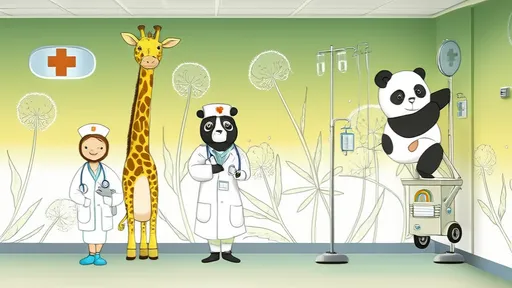
The sterile white walls of hospitals have long been associated with clinical efficiency, but for young patients, this environment often amplifies fear and discomfort. A growing body of research now suggests that strategically designed corridor murals can serve as powerful tools for emotional first aid, transforming intimidating medical spaces into welcoming environments that reduce children’s preoperative stress by up to 68%.
Arts

Clay Sculpture Therapy: Tactile Reconstruction of Traumatic Memories"

By /Jul 8, 2025

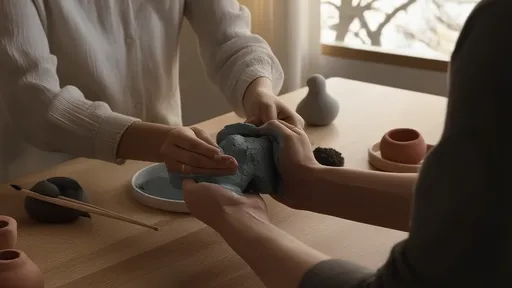
In a world where trauma often leaves invisible scars, therapists are increasingly turning to unconventional methods to help survivors rebuild their lives. Among these, clay sculpting has emerged as a powerful therapeutic tool, offering a tactile bridge between fractured memories and emotional healing. This approach, known as clay therapy or tactile reconstruction, operates on the principle that trauma disrupts not just the mind, but the body's relationship with the physical world.
Arts

Choral Intervention: Group Singing to Improve Social Anxiety"

By /Jul 8, 2025

Social anxiety disorder (SAD) affects millions worldwide, making everyday interactions feel overwhelming. Traditional treatments like cognitive-behavioral therapy and medication have proven effective, but researchers are now exploring alternative approaches. One surprising contender? Choir singing. Recent studies suggest that group singing may offer unique psychological benefits for those struggling with social fears.
Arts

Horticultural Therapy: The Soothing Touch of Soil for Alzheimer's Relief"

By /Jul 8, 2025

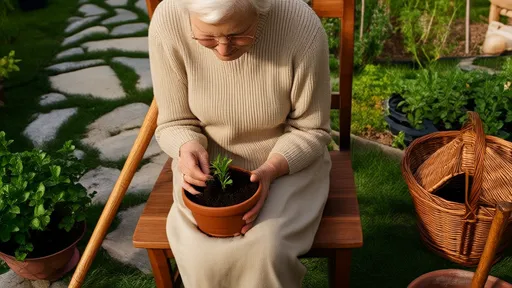
The gentle rustle of leaves, the earthy scent of damp soil, and the warmth of sunlight filtering through branches—these sensory experiences are more than just pleasant moments in a garden. For individuals living with Alzheimer’s disease, they can be lifelines to clarity, calm, and even cognitive improvement. Horticultural therapy, an increasingly recognized complementary treatment, is proving that the simple act of digging, planting, or touching soil can have profound effects on those grappling with memory loss and cognitive decline.
Arts

Suzhou Embroidery AR Manual: Technological Empowerment of Needlework Demonstrations"

By /Jul 8, 2025

The ancient art of Su embroidery, a UNESCO Intangible Cultural Heritage from China's Jiangsu province, has entered a revolutionary new era through augmented reality technology. What was once a closely guarded tradition passed down through generations of artisans is now being preserved and disseminated through cutting-edge AR manuals that bring stitch techniques to life.
Arts

Dong Ethnic Group Choral VR Collection: Immersive Preservation of Polyphonic Sound Field"

By /Jul 8, 2025

In the misty mountains of southern China, where the Dong ethnic minority has safeguarded an ancient musical tradition for centuries, a groundbreaking fusion of culture and technology is unfolding. Researchers and audio engineers are employing virtual reality (VR) to document the intricate polyphonic textures of Dong choral singing—a UNESCO-listed intangible cultural heritage that risks fading into silence amid modernization.
Arts

Electronic Ink Screens: The Oriental Writing Experience on Digital Devices"

By /Jul 8, 2025

In an era dominated by high-resolution OLED displays and flickering LED screens, a quiet revolution is taking place in the world of digital devices. The emergence of electronic ink screens, particularly those designed to emulate traditional East Asian calligraphy and writing, represents a fascinating fusion of ancient artistry with cutting-edge technology. These specialized displays are redefining what it means to interact with digital content while paying homage to centuries-old writing traditions.
Arts

Numerical Control Seal Carving: Exploring the Engraving Tool Paths Generated by Algorithms

By /Jul 8, 2025

In the intersection of traditional craftsmanship and modern technology, a fascinating innovation is taking shape: computer numerical control (CNC) seal engraving. This emerging field combines the ancient art of Chinese seal carving with algorithmic path planning, opening new possibilities for precision, efficiency, and artistic expression.
Arts

Intelligent Shadow Puppetry: Mechanical Transmission Replaces the Puppeteer's Fingers"

By /Jul 8, 2025

The ancient art of shadow puppetry, a cultural treasure with roots stretching back over two millennia, is undergoing a radical transformation. In workshops and studios across China, engineers and artists are collaborating to replace human fingers with precision-engineered mechanical systems. This fusion of tradition and technology is giving birth to what enthusiasts are calling "intelligent shadow play" – a new form of performance that maintains the aesthetic charm of the original while introducing unprecedented consistency and complexity in movement.
Arts

Healing Art of the Treehole: A Gentle Outlet for Trauma Narratives"

By /Jul 8, 2025

In an era where mental health awareness is gaining momentum, a groundbreaking approach has emerged from the intersection of art therapy and trauma recovery. The Healing Art of Tree Hollows: A Gentle Outlet for Trauma Narratives represents more than just a therapeutic method—it’s a cultural shift in how we process pain. This innovative practice transforms the ancient symbolism of tree hollows into a modern container for emotional release, blending nature’s wisdom with psychological healing.
Arts

Bus Stop Poetry Project: A Literary Station for Commuters"

By /Jul 8, 2025

In the heart of the city’s relentless rhythm, where the hum of engines and the shuffle of feet dominate the soundscape, an unexpected quiet rebellion is taking root. The Poetry at Bus Stops initiative has transformed mundane transit hubs into intimate literary spaces, offering weary commuters a moment of respite through verse. What began as a pilot project in a handful of neighborhoods has blossomed into a citywide movement, proving that even in the most utilitarian corners of urban life, art can flourish.
Arts

Sidewalk Crack Repair: The Urban Practice of Kintsugi Philosophy

By /Jul 8, 2025

In the quiet predawn hours of Tokyo, municipal workers kneel on cracked concrete with gold-dusted epoxy, treating fractures in the pavement like sacred wounds. This practice, inspired by the ancient Japanese art of kintsugi (golden joinery), represents a radical shift in urban maintenance philosophy—where infrastructure repair becomes an act of reverence rather than concealment.
Arts

The Abandoned Phone Booth Library: A Nerve Node of Community Culture

By /Jul 8, 2025

In an age where smartphones dominate communication, the sight of a red telephone booth in Britain—or its equivalents elsewhere—often evokes nostalgia. Yet, some of these relics of the 20th century have found new life as micro-libraries, transforming into unexpected hubs of community interaction. These repurposed booths are no longer just storage spaces for forgotten phone directories; they’ve become neural nodes in the cultural ecosystem of neighborhoods, stitching together collective memory and contemporary creativity.
Arts

Elevator Car Renovation: A Mini Art Gallery in Vertical Space

By /Jul 8, 2025

The concept of transforming elevator cabins into miniature art galleries is revolutionizing urban spaces worldwide. What was once a purely functional and often overlooked transitional area is now becoming a canvas for creative expression. This innovative approach to public art challenges traditional notions of exhibition spaces while bringing culture directly to people's daily routines.