Microfiction Writing: Constructing a Complete World in 500 Words

Jul 9, 2025 By

The art of microfiction represents one of literature's most demanding disciplines. In fewer than 500 words - sometimes as few as 50 - practitioners must construct entire worlds that feel as rich and lived-in as full-length novels. This compressed storytelling form has gained remarkable popularity in our attention-scarce digital age, appearing everywhere from literary magazines to Twitter threads.

What makes microfiction distinct from traditional short stories isn't merely length, but rather a fundamental reimagining of how narrative works. Where novelists have chapters to develop characters and short story writers might use several scenes, microfiction authors must employ what Hemingway called the "iceberg theory" - showing only the essential 10% while implying the remaining 90% beneath the surface. The form demands ruthless editing and perfect word choice, where every comma carries weight and each sentence performs double or triple duty.

Successful microfiction creates the illusion of expansiveness within extreme constraints. Readers should finish these tiny stories feeling they've glimpsed not just a moment, but an entire universe. This magic trick relies on several techniques: precise sensory details that suggest larger contexts, meaningful silences where readers fill gaps with their imagination, and resonant endings that continue vibrating in the mind long after reading.

The opening sentence of a microfiction piece must accomplish what traditional stories do across pages. Consider this example from Lydia Davis' "A Double Negative": "At a certain point in her life, she realizes it is not so much that she wants to have a child as that she does not want not to have a child." In twenty-eight words, we receive a complete character arc, understand complex emotional contradictions, and sense the societal pressures surrounding motherhood - all while the story propels us forward.

Worldbuilding presents particular challenges in microfiction. Fantasy and sci-fi micro stories can't rely on elaborate exposition or maps. Instead, they might use a single telling detail - the way light reflects off a spaceship's hull, or the peculiar smell of a magic potion - to imply entire civilizations. Karen Russell's "The Gondoliers" postulates a flooded future Florida in just 500 words by focusing on sisters who navigate submerged neighborhoods by memory, their boats scraping against rooftops. We never receive a geological explanation for the flooding, nor a political history of this waterworld - we don't need one. The visceral reality comes through in carefully chosen specifics.

Character development follows similar principles. Rather than lengthy backstories, microfiction offers flashes of revealing action. In "Sticks" by George Saunders (just 392 words), a father's entire psychological unraveling manifests through his obsessive decoration of a metal pole in the yard. The story spans decades while never leaving this single symbolic object, demonstrating how microfiction often finds the universal in the hyper-specific.

The most powerful microfiction frequently employs what writers call "the turn" - a moment where the story pivots to reveal deeper meaning. This resembles poetry's volta, compressed into narrative form. In Amelia Gray's 100-word "The Moment," a couple's mundane breakfast conversation about jam takes a haunting turn with the line: "I think you're confusing me with someone who still exists." The entire relationship's dissolution crystallizes in this single utterance, proving how microfiction can deliver emotional impacts disproportionate to word count.

Contemporary microfiction increasingly experiments with form while maintaining core principles of compression and implication. Some stories arrange text visually to create double meanings. Others play with typography or white space. "Choose Your Own Adventure" style branching narratives have found new life in digital microfiction, where readers click through ultra-short segments. Regardless of format, the best examples continue demonstrating that constraints breed creativity - that limitation is the mother of invention.

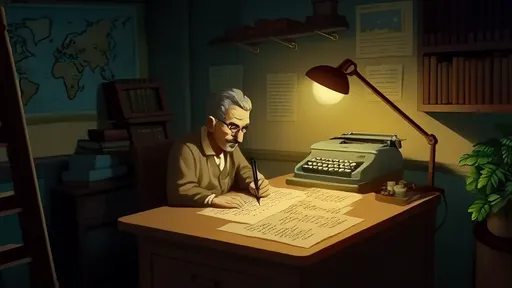
For writers attempting microfiction, the editing process becomes the true art form. Early drafts often contain unnecessary scaffolding - exposition, transitions, explanations - that must be stripped away to reveal the essential story beneath. This distillation process resembles carving a statue from marble, removing everything that doesn't belong until the form emerges. What remains isn't a fragment, but rather a complete world in miniature, one where readers become active participants in constructing meaning from carefully placed clues.

The rise of microfiction corresponds with broader cultural shifts toward compressed storytelling. From six-second Vine videos to Twitter threads, modern audiences have developed remarkable abilities to parse complex narratives from minimal components. Yet microfiction maintains its literary distinction by prioritizing emotional truth over efficiency, using brevity not to simplify human experience, but to intensify it. In an era of endless scrolling, these tiny complete worlds offer something increasingly rare: the satisfaction of wholeness.

Perhaps microfiction's greatest lesson extends beyond writing. In demonstrating how much can be conveyed with so little, the form reminds us that richness doesn't require abundance. A few well-chosen words can contain multitudes; a perfectly crafted moment can imply eternity. As readers, we finish these miniature masterpieces not feeling cheated of content, but amazed by how much the human imagination can expand within such small containers.
Recommend Posts
Arts

Microfiction Writing: Constructing a Complete World in 500 Words

By /Jul 9, 2025

The art of microfiction represents one of literature's most demanding disciplines. In fewer than 500 words - sometimes as few as 50 - practitioners must construct entire worlds that feel as rich and lived-in as full-length novels. This compressed storytelling form has gained remarkable popularity in our attention-scarce digital age, appearing everywhere from literary magazines to Twitter threads.
Arts

The Psychology of Colors in Children's Book Illustrations: How to Attract Young Readers"

By /Jul 9, 2025

From the moment a child opens a picture book, color plays a silent yet powerful role in shaping their reading experience. Unlike adults who process stories primarily through text, young readers rely heavily on visual cues to interpret narratives, emotions, and underlying messages. The strategic use of color in children's book illustrations isn't merely decorative—it's a psychological language that speaks directly to developing minds.
Arts

The Art of Mime: The Poetic Expression of Body Language

By /Jul 9, 2025

In a world increasingly dominated by digital communication and rapid-fire dialogue, the ancient art of mime stands as a silent yet profound testament to the power of unspoken expression. Mime, often misunderstood as mere street performance or children’s entertainment, is in fact a sophisticated theatrical discipline that transcends linguistic barriers. It is a dance of gestures, a symphony of movement, and above all, a poetic language of the body.
Arts

The Prison Mural Project: A Path to Self-Reconstruction Within the Walls"

By /Jul 8, 2025

In the stark, unyielding environment of a prison, where concrete walls and steel bars dominate the landscape, an unexpected transformation is taking place. Across correctional facilities in several countries, incarcerated individuals are picking up paintbrushes and turning blank walls into vibrant murals. This initiative, known as The Prison Mural Project, is more than just an art program—it’s a lifeline for those seeking redemption, self-expression, and a path to personal reconstruction.
Arts

Hospital Corridor Murals: A Color Dilution Plan for Alleviating Children's Fears"

By /Jul 8, 2025

The sterile white walls of hospitals have long been associated with clinical efficiency, but for young patients, this environment often amplifies fear and discomfort. A growing body of research now suggests that strategically designed corridor murals can serve as powerful tools for emotional first aid, transforming intimidating medical spaces into welcoming environments that reduce children’s preoperative stress by up to 68%.
Arts

Clay Sculpture Therapy: Tactile Reconstruction of Traumatic Memories"

By /Jul 8, 2025

In a world where trauma often leaves invisible scars, therapists are increasingly turning to unconventional methods to help survivors rebuild their lives. Among these, clay sculpting has emerged as a powerful therapeutic tool, offering a tactile bridge between fractured memories and emotional healing. This approach, known as clay therapy or tactile reconstruction, operates on the principle that trauma disrupts not just the mind, but the body's relationship with the physical world.
Arts

Choral Intervention: Group Singing to Improve Social Anxiety"

By /Jul 8, 2025

Social anxiety disorder (SAD) affects millions worldwide, making everyday interactions feel overwhelming. Traditional treatments like cognitive-behavioral therapy and medication have proven effective, but researchers are now exploring alternative approaches. One surprising contender? Choir singing. Recent studies suggest that group singing may offer unique psychological benefits for those struggling with social fears.
Arts

Horticultural Therapy: The Soothing Touch of Soil for Alzheimer's Relief"

By /Jul 8, 2025

The gentle rustle of leaves, the earthy scent of damp soil, and the warmth of sunlight filtering through branches—these sensory experiences are more than just pleasant moments in a garden. For individuals living with Alzheimer’s disease, they can be lifelines to clarity, calm, and even cognitive improvement. Horticultural therapy, an increasingly recognized complementary treatment, is proving that the simple act of digging, planting, or touching soil can have profound effects on those grappling with memory loss and cognitive decline.
Arts

Suzhou Embroidery AR Manual: Technological Empowerment of Needlework Demonstrations"

By /Jul 8, 2025

The ancient art of Su embroidery, a UNESCO Intangible Cultural Heritage from China's Jiangsu province, has entered a revolutionary new era through augmented reality technology. What was once a closely guarded tradition passed down through generations of artisans is now being preserved and disseminated through cutting-edge AR manuals that bring stitch techniques to life.
Arts

Dong Ethnic Group Choral VR Collection: Immersive Preservation of Polyphonic Sound Field"

By /Jul 8, 2025

In the misty mountains of southern China, where the Dong ethnic minority has safeguarded an ancient musical tradition for centuries, a groundbreaking fusion of culture and technology is unfolding. Researchers and audio engineers are employing virtual reality (VR) to document the intricate polyphonic textures of Dong choral singing—a UNESCO-listed intangible cultural heritage that risks fading into silence amid modernization.
Arts

Electronic Ink Screens: The Oriental Writing Experience on Digital Devices"

By /Jul 8, 2025

In an era dominated by high-resolution OLED displays and flickering LED screens, a quiet revolution is taking place in the world of digital devices. The emergence of electronic ink screens, particularly those designed to emulate traditional East Asian calligraphy and writing, represents a fascinating fusion of ancient artistry with cutting-edge technology. These specialized displays are redefining what it means to interact with digital content while paying homage to centuries-old writing traditions.
Arts

Numerical Control Seal Carving: Exploring the Engraving Tool Paths Generated by Algorithms

By /Jul 8, 2025

In the intersection of traditional craftsmanship and modern technology, a fascinating innovation is taking shape: computer numerical control (CNC) seal engraving. This emerging field combines the ancient art of Chinese seal carving with algorithmic path planning, opening new possibilities for precision, efficiency, and artistic expression.
Arts

Intelligent Shadow Puppetry: Mechanical Transmission Replaces the Puppeteer's Fingers"

By /Jul 8, 2025

The ancient art of shadow puppetry, a cultural treasure with roots stretching back over two millennia, is undergoing a radical transformation. In workshops and studios across China, engineers and artists are collaborating to replace human fingers with precision-engineered mechanical systems. This fusion of tradition and technology is giving birth to what enthusiasts are calling "intelligent shadow play" – a new form of performance that maintains the aesthetic charm of the original while introducing unprecedented consistency and complexity in movement.
Arts

Healing Art of the Treehole: A Gentle Outlet for Trauma Narratives"

By /Jul 8, 2025

In an era where mental health awareness is gaining momentum, a groundbreaking approach has emerged from the intersection of art therapy and trauma recovery. The Healing Art of Tree Hollows: A Gentle Outlet for Trauma Narratives represents more than just a therapeutic method—it’s a cultural shift in how we process pain. This innovative practice transforms the ancient symbolism of tree hollows into a modern container for emotional release, blending nature’s wisdom with psychological healing.
Arts

Bus Stop Poetry Project: A Literary Station for Commuters"

By /Jul 8, 2025

In the heart of the city’s relentless rhythm, where the hum of engines and the shuffle of feet dominate the soundscape, an unexpected quiet rebellion is taking root. The Poetry at Bus Stops initiative has transformed mundane transit hubs into intimate literary spaces, offering weary commuters a moment of respite through verse. What began as a pilot project in a handful of neighborhoods has blossomed into a citywide movement, proving that even in the most utilitarian corners of urban life, art can flourish.
Arts

Sidewalk Crack Repair: The Urban Practice of Kintsugi Philosophy

By /Jul 8, 2025

In the quiet predawn hours of Tokyo, municipal workers kneel on cracked concrete with gold-dusted epoxy, treating fractures in the pavement like sacred wounds. This practice, inspired by the ancient Japanese art of kintsugi (golden joinery), represents a radical shift in urban maintenance philosophy—where infrastructure repair becomes an act of reverence rather than concealment.
Arts

The Abandoned Phone Booth Library: A Nerve Node of Community Culture

By /Jul 8, 2025

In an age where smartphones dominate communication, the sight of a red telephone booth in Britain—or its equivalents elsewhere—often evokes nostalgia. Yet, some of these relics of the 20th century have found new life as micro-libraries, transforming into unexpected hubs of community interaction. These repurposed booths are no longer just storage spaces for forgotten phone directories; they’ve become neural nodes in the cultural ecosystem of neighborhoods, stitching together collective memory and contemporary creativity.
Arts

Elevator Car Renovation: A Mini Art Gallery in Vertical Space

By /Jul 8, 2025

The concept of transforming elevator cabins into miniature art galleries is revolutionizing urban spaces worldwide. What was once a purely functional and often overlooked transitional area is now becoming a canvas for creative expression. This innovative approach to public art challenges traditional notions of exhibition spaces while bringing culture directly to people's daily routines.